
If you’re living in Toronto and searching for effective mental health support, understanding the difference between counselling and psychotherapy in Toronto is crucial. With a wide range of therapy options for adults, teens, couples, and families, knowing which path to take can help you or your loved ones access the best possible care—no matter if you’re struggling with depression, anxiety, PTSD, relationship issues, or daily stressors. In this comprehensive guide, we’ll break down the major differences between counselling and psychotherapy, how each approach can benefit you, and how to choose the right provider for your unique needs in 2026.
Table of Contents
- Introduction
- Understanding Therapy: Why It Matters
- Difference Between Counselling and Psychotherapy in Toronto
- Exploring Counselling: What Is It?
- All About Psychotherapy: An In-Depth Approach
- Counselling vs Psychotherapy for Adults, Teens, and Couples
- How to Choose: Factors to Consider When Seeking Help
- Counselling and Psychotherapy Services in Toronto
- Frequently Asked Questions
- Conclusion: Start Your Journey to Wellness
Introduction
Toronto is home to a diverse population, each with unique backgrounds and mental health needs. Whether you are navigating life’s challenges, coping with a mental health diagnosis, or seeking to improve your relationships, therapy can play a pivotal role in your well-being. But with so many practitioners and therapy types available in 2026, the terms counselling and psychotherapy are often used interchangeably—sometimes causing confusion and hesitation about where to begin. This article aims to demystify what each term means, explore their differences and similarities, and help you make informed choices on your path to healing in Toronto.
Understanding Therapy: Why It Matters
Therapy offers a confidential, supportive space to work through emotional distress, trauma, or troubling life events. A mental health professional acts as a guide and facilitator, helping you develop coping skills, process feelings, and set achievable goals. The support of a qualified therapist can have profound impacts on:
- Reducing symptoms of depression, anxiety, and PTSD
- Improving relationships and communication for couples and families
- Supporting teens and adolescents through challenging life stages
- Managing grief, loss, or workplace stress
- Enhancing personal growth, self-esteem, and resilience
Understanding the difference between counselling and psychotherapy in Toronto can ensure you find the right approach for your goals and challenges.
Difference Between Counselling and Psychotherapy in Toronto
The distinction between counselling and psychotherapy might seem subtle, but it’s important for anyone seeking therapy in Toronto. While both aim to help individuals overcome psychological difficulties, they differ in their focus, depth, and techniques.
What Sets Them Apart?
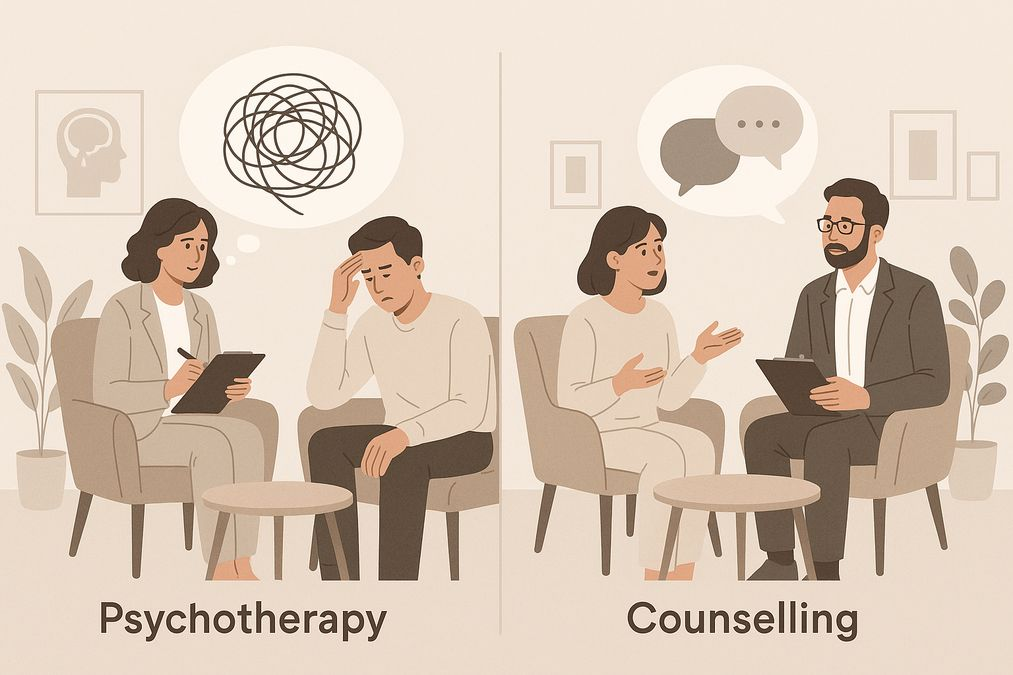
- Counselling generally focuses on specific issues, present-day concerns, or adjustment problems. It is often short-term, solution-oriented, and can help with stress, relationships, or achieving personal goals.
- Psychotherapy delves deeper, exploring the underlying patterns, root causes, and long-standing emotional issues. It is especially effective for complex mental health conditions like depression, PTSD, or chronic anxiety, and may be longer-term.
Both are delivered by trained professionals (Counsellors, Psychotherapists, Registered Social Workers, or Psychologists), and both are available in Toronto.
Why Does This Difference Matter?
- Choosing the right type of help can improve your therapy outcomes.
- Counselling may be ideal for practical guidance and short-term challenges.
- Psychotherapy is recommended for deeper-rooted or long-term mental health struggles.
- Understanding the difference helps you match your needs with a provider’s expertise.
Exploring Counselling: What Is It?
Counselling is a collaborative process where a qualified counsellor helps clients address specific life issues or immediate concerns. These can include relationship difficulties, grief, academic pressures, or situational stressors. The counselling process is typically:
- Short to medium-term (a few sessions to several months)
- Solution-focused, practical, & goal-oriented
- Centered around current problems and behaviours
- Guided by active listening, empathy, and skill-building
Common Reasons to Seek Counselling in Toronto
- Managing workplace or academic stress
- Coping with grief or loss
- Improving communication in relationships
- Making big life decisions or transitions
- Learning better coping and problem-solving skills
Counsellors work with a diverse clientele—including individuals, couples, teens, and families. In a multicultural city like Toronto, many counselling services are available in multiple languages and are sensitive to cultural backgrounds.
Benefits of Counselling
- Quick access and often shorter wait times
- Emphasis on empowerment and action steps
- Safe, non-judgmental environment
- Flexible, solution-oriented support
All About Psychotherapy: An In-Depth Approach
Psychotherapy addresses more complex emotional and psychological challenges. It involves working with a licensed psychotherapist or psychologist to explore the roots of emotional distress, unhealthy patterns, and long-standing difficulties. This approach is:
- Medium to long-term in nature (months to years)
- More intensive, with regular sessions (often weekly or biweekly)
- Focused on deep self-exploration and personal insight
- Effective for conditions such as depression, anxiety, PTSD, eating disorders, and personality disorders
How Does Psychotherapy Work?
Sessions often explore how past experiences, unconscious beliefs, and relationships have shaped current behaviours. Techniques might include talk therapy, cognitive-behavioural therapy (CBT), psychodynamic therapy, dialectical behaviour therapy (DBT), or trauma-informed approaches.
Is Psychotherapy Right for You?
- You have tried counselling, but deeper issues persist
- You need to address trauma or childhood experiences
- You’re coping with chronic or complex mental health symptoms
- You want lasting change and deeper personal understanding
For an in-depth look at anxiety-specific psychotherapy strategies and which may suit you in Toronto, check out this guide to psychotherapy techniques for anxiety.
Counselling vs Psychotherapy for Adults, Teens, and Couples
Both counselling and psychotherapy can benefit people of all ages and backgrounds. However, your age group, relationship status, and reasons for seeking help may influence which approach is best.
Adults
- Counselling is often ideal for managing work-life balance, relationship conflict, or temporary life stressors.
- Psychotherapy can help adults heal from trauma, manage chronic mental health conditions, or break recurring unhealthy patterns.
Teens & Adolescents
Adolescence is a period of rapid growth and change. Teens face unique mental health concerns—social pressures, academic stress, identity issues, bullying, or risk-taking behaviours. Choosing between counselling and psychotherapy depends on symptom severity, family dynamics, and individual needs.
- Counselling equips teens with coping skills and provides support through transitions such as divorce, relocation, or school challenges.
- Psychotherapy addresses more complex issues like anxiety disorders, trauma, depression, or self-harm.
Finding the right provider for youth mental health can be a challenge, so exploring local clinics and their approach is key. Discover how to find the best adolescent psychotherapy clinic in Toronto for your teen in 2026.
Couples & Families
- Counselling for couples can help improve communication, resolve conflicts, and navigate life changes like marriage or parenting.
- Psychotherapy is suitable for couples or families dealing with deeper issues such as infidelity, trauma, or long-standing relationship distress.
Special Considerations for Teens: Techniques That Work
Modern therapy offers specialized modalities for young people dealing with anxiety, depression, or social fears. To learn about strategies that help teens thrive, see effective teen therapy techniques for anxiety in Toronto.
How to Choose: Factors to Consider When Seeking Help
Making the decision to seek support is a huge step toward a healthier, happier life. Here are some tips to help you choose between counselling and psychotherapy in Toronto:
- Define your main challenge or goal—do you require short-term advice or long-term healing?
- Consider the severity and duration of your symptoms
- Assess your readiness for self-reflection and deeper change
- Check if you have insurance coverage (some plans distinguish between the two)
- Ask potential providers about their qualifications, areas of expertise, and therapy methods
- Cultural sensitivity and language—do you need someone who understands your community or background?
- Convenience: Are remote/virtual sessions available if needed?
- Budget—some options may offer sliding-scale fees or community funding
Questions to Ask Your Provider
- What approach do you recommend for my situation?
- What is your experience in treating issues like mine?
- How do you measure progress, and what does success look like?
- Are you licensed/registered with a professional regulatory body in Ontario?
Counselling and Psychotherapy Services in Toronto
Toronto offers a robust network of mental health providers. Whether you need in-person, virtual, group, or individual sessions, there is likely a provider who fits your preferences and budget. Services include:
- Individual therapy for adults, teens, and young adults
- Couples and marriage counselling
- Family therapy and parent coaching
- Specialized trauma and PTSD support
- Anxiety, depression, and mood disorder treatment
- Stress management and skill-building workshops
- Support for cultural, LGBTQ+, and newcomer communities
- Remote and virtual therapy for convenience
- Eternal Minds as a leading provider of counselling and psychotherapy in Toronto, with expert clinicians ready to support you in 2026
Why Choose Eternal Minds?
- Experienced, licensed therapists and counsellors
- Evidence-based and trauma-informed approaches
- Flexible scheduling including evenings and weekends
- Support for adults, couples, teens, and families
- Culturally responsive care for Toronto’s diverse communities
Frequently Asked Questions
Is there overlap between counselling and psychotherapy?
Yes. The distinction is not always clear-cut, and many Toronto practitioners are trained in both. What matters most is the provider’s fit with your needs and their ability to build a trusting, therapeutic relationship.
Can I switch between counselling and psychotherapy?
Absolutely. Many clients begin with counselling and transition to psychotherapy, or vice versa, as their needs evolve. Your provider can help guide this process.
Are services covered by insurance in Toronto?
Many private insurance plans in Ontario cover sessions with Registered Psychotherapists, Social Workers, or Psychologists. Coverage depends on your provider and policy. Check with your insurer and ask your therapist to confirm their credentials.
How do I know if I need urgent or crisis help?
If you or a loved one is experiencing a mental health crisis or thoughts of self-harm, seek immediate help from your nearest emergency department or by calling a crisis line in Toronto. Counselling and psychotherapy provide ongoing, non-crisis support.
Conclusion: Start Your Journey to Wellness
Understanding the difference between counselling and psychotherapy in Toronto is a vital step toward selecting the right mental health support for you, your teen, or your loved ones in 2026. Whether you benefit more from practical, present-focused counselling or deep, transformative psychotherapy depends on your goals, history, and personal preference. By working with skilled professionals—such as those at Eternal Minds—you are taking a powerful step toward a brighter, more resilient future.
Ready to start your mental health journey? Book your free consultation with an expert therapist at Eternal Minds and discover how therapy can transform your well-being. Connect now to schedule your free consultation!

Related Posts
Meta Description (for SEO): Discover how psychotherapy and counselling differ [...]

Are you searching for effective therapy and counselling options in [...]
Understanding Anxiety and Its Impact on Daily Life Anxiety is [...]
